

Be supported by the experts you can trust.
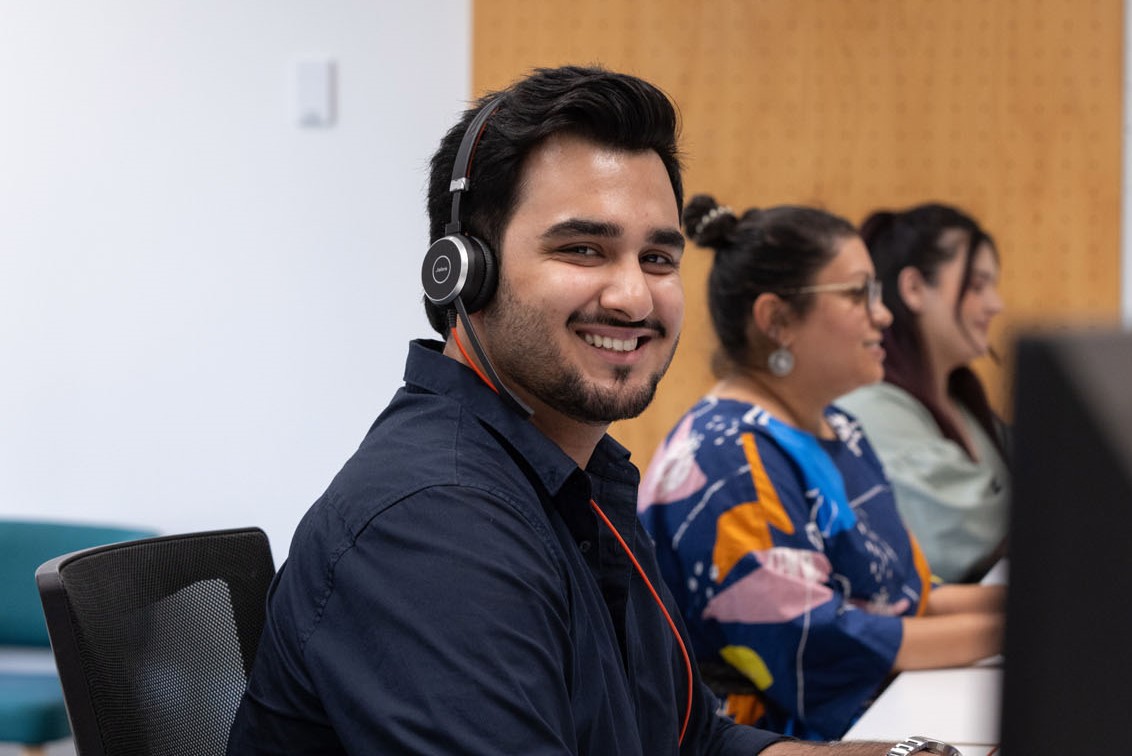
As our customer, you will be supported by a dedicated claims team who will work with you to understand the needs of your business and deliver compassionate care to your people should they be injured in a work-related incident.
We’re the experts in personal injury claims management. It’s what we do best and we remain the only Claims Service Provider (CSP) consistently meeting or exceeding icare NSW’s return to work performance metrics.
In addition to our expertise in claims management, we also offer our customers free access to a range of WHS tools, online training, facilitated events, world first research programs and pilots designed to improve workplace health, safety and wellbeing through the Mutual Benefits Program. These benefits apply even if you never make a workers compensation claim.
Whether you’re a current EML customer, a previous customer ready to return to us or if you are entirely new to our business, our team is ready to assist you.
As an EML customer, you can be assured that your business and your people are supported by a team committed to continuous improvement and supported by sophisticated systems focused on outcomes.
We have the most experienced claims teams in NSW, with low caseloads and dedicated initiatives to support workers recover from injury and return to employment.
Ensuring liability decisions and payments are made on time is the foundation of quality case management. We are proud to lead performance across these key metrics, while continuing to manage a significantly higher proportion of claims in NSW.
We know that lower caseloads ensure our case managers have the capacity to deliver better outcomes, giving them more time for proactive and strategic case management. Since March 2023, our average caseload has reduced by a further 15% and is now one of the lowest in the NSW Scheme, at an average of 38 per case manager.
The workers compensation claims process can be challenging, which is why we maintain a high level of proactive communication and service to all stakeholders. This approach helps avoid unnecessary delays or confusion that can hold up the progress of a claim.
In addition to investing in our legal, mental health, work capacity and RTW specialists, we continuously work to improve our claims service model and ability to deliver compassionate care to help people get their lives back.


Mental health claims which involve interpersonal conflict are some of the most complex we manage; with longer durations, higher costs and lower return to work rates. Since 2024, our Recovery Pathways team has provided additional support for the first 14 weeks of these claims; helping workers access treatment and, as qualified mediators, effectively supporting conflict resolution with all stakeholders. The early results are incredibly promising with improved return to work outcomes, earlier access to treatment and higher upgrades in capacity.

When it comes to recovery, face to face support can make all the difference. That's why our team of NSW-based mobile case managers work directly with injured workers, employers and treating doctors to speed up recovery, reduce stress and improve return to work outcomes. In 2025 alone, our team conducted over 8,400+ visits and teleconferences; helping to fast-track treatment with their ability to provide immediate approvals and reducing barriers to recovery and return to work by improving communication between all parties involved in a claim.

Both physiotherapy and prescription medication play crucial roles in helping injured workers recover from workplace injury and both can significantly influence recovery outcomes when not appropriately monitored. Our team of in-house physiotherapists and pharmacists leverage their clinical experience to ensure treatments remain clinically justified, evidence-based and focused on recovery.

Musculoskeletal disorders are a leading cause of workplace injuries and responsible for most of the workers compensation claims in Australia. Our Wearable Technology Workplace Risk Assessment is a powerful solution for employers with physically demanding roles. By tracking job tasks in real time through Bluetooth sensors, our consultants can analyse movement patterns, highlight high-risk activities, and provide data-driven strategies to prevent injuries and support faster recovery.
All workers insurance policy and billing services are managed by icare. For further information regarding a new or existing policy or to request a certificate of currency visit the icare website.
Visit the icare website to access useful forms and resources for claims and premium management.
The State Insurance Regulatory Authority (SIRA) outlines obligations for employers in NSW regarding workers compensation.
Browse our training across workers compensation, health and safety, return to work and mental health.
Browse our training across workers compensation, health and safety, return to work and mental health.
Browse our training across workers compensation, health and safety, return to work and mental health.
Browse our training across workers compensation, health and safety, return to work and mental health.