Support for workplaces

We’re invested in your workplace

Over the last 10 years, more than $144 million has been invested through the Mutual Benefits Program into innovative research, tools and initiatives to help Australian businesses to improve workplace safety and injury management.

As a customer, you and your people benefit from access to free training, resources and exciting programs such as Wearable Technology Risk Assessments and Recovery Pathways.

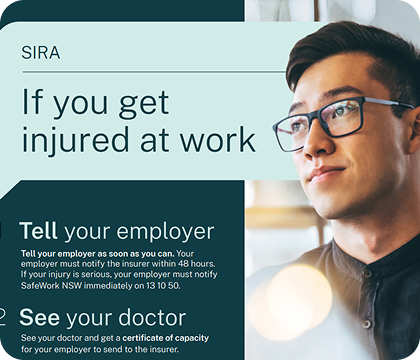
If you are injured at work poster

Download this poster from the SIRA website to ensure your workers know what to do if an injury occurs at work. This information must include the name and address of your provider and must always be available in the workplace.

Address: EML, Locked Bag 2099, North Ryde BC, NSW 1670
Phone: 133 365

Policy and premium management

Certificate of Currency Information

All workers insurance policy and billing services are managed by icare. For further information regarding a new or existing policy or to request a Certificate of Currency visit the icare website.


W: icare

T: 13 44 22 

All workers insurance policy and billing services are managed by icare. For further information regarding policy information, contact icare or visit the self service portal on the icare website.

W: icare self service

T: 13 44 22 

Industry leading support

Free tools for your workplace

Instructor presenting in front of a classroom.

We provide our customers with complimentary access to our training events, to support the professional development of their workers.

Read less Read more
Professionals shaking hands on a construction site.

Access savings on training, technology and consulting services from industry leaders.

Read less Read more
Confident woman with curly hair and folded arms.

Workplace harassment health check

Available for organisations at no cost to evaluate their approach to safety management within the workplace.

Read less Read more
Two colleagues collaborating at a laptop.

EMSafe

A free on online tool designed to help simplify how workplaces monitor and manage workplace health and safety.

Read less Read more
Smiling barber holding a tablet in salon.

The workplace safety health check

Available for organisations at no cost to evaluate their approach to safety management within the workplace.

Read less Read more
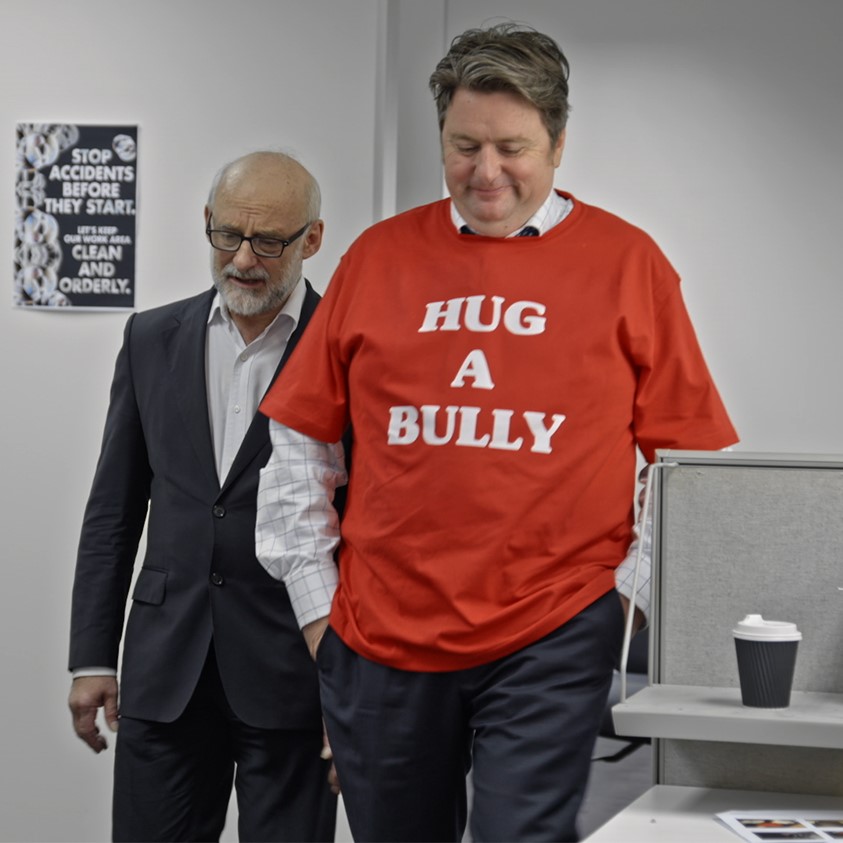
Man in red shirt promotes anti-bullying message.

(Mis)Behave with Dave

A six-part video series, (Mis)behave with Dave, highlights what employers can do to reduce the risk of mental injury among employees.

Read less Read more

Downloads

Free posters for your workplace

Resources

Resources for claims, recovery and workplaces

Training

Customised and flexible learning for workplace peace of mind

Upcoming sessions

Browse our training across workers compensation, health and safety, return to work and mental health.

Workers compensation: National updates and insights

This course is designed to provide employers with an update on current issues impacting workers compensation schemes, the latest trends, external factors and legal implications, and the expected implications of these issues for employers. Topics include: Overview of Workers Compensation in Australia; State Schemes updates and impacts.
Host : Internal

Upcoming sessions

Browse our training across workers compensation, health and safety, return to work and mental health.

Managing risk in an ageing workforce

Workforces are more age-diverse than ever, bringing both opportunity and evolving risk. This session explores the physical, psychological, and organisational risks associated with an ageing workforce, and how these can impact health, safety, and performance. Participants will gain practical strategies to support safe, sustainable work and build more age-inclusive workplaces.
Host : Recovre

Stay S.A.F.E.R.® de-escalation program

Workplace interactions can sometimes become challenging, emotional, or confrontational. The Stay S.A.F.E.R.® De-escalation Program provides practical skills and strategies to help participants recognise early signs of escalation, respond effectively to heightened emotions, and support safer, more positive outcomes for everyone involved. This interactive workshop explores the Escalation Cycle and equips participants with techniques to prevent situations from intensifying, communicate effectively under pressure, and apply de-escalation strategies in a range of workplace contexts. Participants will also learn how to maintain safety during emergency situations and reflect on incidents to support continuous improvement.
Host : Our Curious Minds

Fatigue is more than tiredness

Fatigue is now recognised within psychosocial hazard frameworks, not just as a physical safety issue but as a psychological risk factor. Ongoing workload pressure, long hours, mental load, and emotional strain can erode coping capacity, judgement, and wellbeing. This session helps leaders recognise fatigue as an early risk indicator.
Host : Lysander

Upcoming sessions

Browse our training across workers compensation, health and safety, return to work and mental health.
Decoding intangible factors: Maximise return to work outcomes

Why do two workers with the same injury have vastly different recovery outcomes? The answer lies in the psychosocial landscape. Work Healthy Australia will explore the psychological drivers of return-to-work success. Join us for a data-driven, practical session designed to turn complex psychosocial theory into actionable workplace recovery strategies.
Host : Work Healthy Australia

Role of the Return to Work Coordinator (VIC)

This WorkSafe Victoria endorsed Return to Work (RTW) program is designed to equip RTW Coordinators with the tools they need to effectively manage return to work under the requirements of the legislation and the principles of effective injury management. A WorkSafe endorsed certificate will be provided upon full participation in the two-day RTWC program. All pre work materials will be provided.
Host : Workplace Interventions

Understanding biopsychosocial risk factors and assessments

Successful recovery after a workplace injury is influenced by more than the diagnosis or severity of injury. Research consistently demonstrates that psychosocial factors often have a greater impact on recovery and return-to-work outcomes than the physical injury itself. This session provides employers, RTW coordinators and supervisors with practical knowledge to identify psychosocial risk factors that may delay recovery, understand the purpose of biopsychosocial assessments, and implement workplace strategies that support recovery and durable return-to-work outcomes.
Host : KINNECT

News & Community

Latest news

Celebrating 10 years of support in Victoria

Healthcare workers dedicate their careers to caring for others, often in complex...

EML and MATES in Construction named PIEF Award finalists

Collaborating with MATES in Construction, the leading suicide prevention charity for tradies...

Self-Insurance done right: How EML helps self-insured employers protect their people, their performance and their licence 

Expanding capability, strengthening partnerships and delivering better outcomes for clients and their...

EML’s Police & Ambulance Bondi Attack Response Leadership Team named PIEF Award finalist

EML has been recognised for its industry leadership and commitment to delivering...
Person smiling, wearing headphones at a computer.
Get in touch your way
Chat with our local claim experts - we're always here to help