Supporting employers

Keeping your workforce strong

Over 30,000 employers in South Australia trust us to step in when injuries happen in the workplace.

We know the impact workplace injuries can have – we’re here to make things right as quickly and effectively as possible. Our support goes beyond managing your workers compensation claims. We help to reduce workplace risks, improve return-to-work outcomes, and control injury-related costs.

With a team of over 60 mobile claims specialists across South Australia, we provide face-to-face support to both your injured workers and your business. We ensure your workers get the early care they need for a swift recovery while keeping your business compliant with return-to-work employer obligations.

But we’re not just about getting you and your employees through times of injury. The Mutual Benefits Program is designed to help you build a future-proof business. With free resources, tools, and training, we help you address health, safety, and injury management challenges long after the claim is resolved – for better workplace safety in South Australia.

Video series

Returning your employee to work

The longer your employee is away from work, the longer their recovery will be. Watch this short video to understand how you can help your workers in their recovery.
Resources

Free tools to support recovery and provide a safer workplace

News & Community

Latest news

EML once again named a Best Workplace for Women!

EML has been recognised as one of the 2026 Best Workplaces for...
top tips to start the year

Top WHS tips to start the year

The start of the year is a good opportunity for us to...

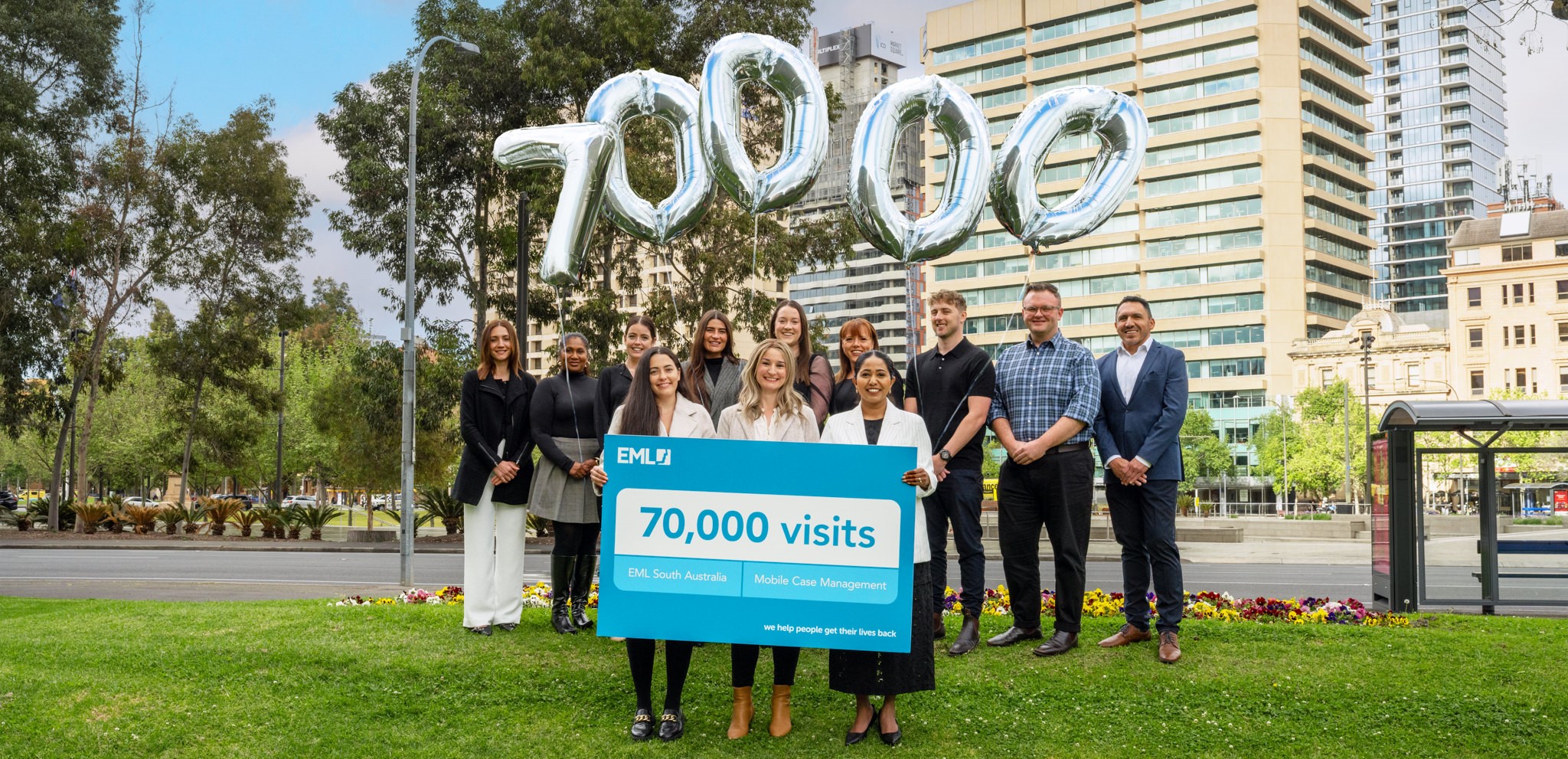
70,000 in-person visits to support recovery!

Our SA mobile claims team has reached a major milestone – 70,000...

EML shines at the 2025 PIEF Awards with three winners

On Monday 27 October, we celebrated the incredible achievements across the personal...

Training

Customised and flexible learning for workplace peace of mind

Upcoming sessions

Browse our training across workers compensation, health and safety, return to work and mental health.
Workers compensation: National updates and insights

This course is designed to provide employers with an update on current issues impacting workers compensation schemes, the latest trends, external factors and legal implications, and the expected implications of these issues for employers. Topics include: Overview of Workers Compensation in Australia; State Schemes updates and impacts.
Host : Internal

Upcoming sessions

Browse our training across workers compensation, health and safety, return to work and mental health.

Stay S.A.F.E.R.® de-escalation program

Workplace interactions can sometimes become challenging, emotional, or confrontational. The Stay S.A.F.E.R.® De-escalation Program provides practical skills and strategies to help participants recognise early signs of escalation, respond effectively to heightened emotions, and support safer, more positive outcomes for everyone involved. This interactive workshop explores the Escalation Cycle and equips participants with techniques to prevent situations from intensifying, communicate effectively under pressure, and apply de-escalation strategies in a range of workplace contexts. Participants will also learn how to maintain safety during emergency situations and reflect on incidents to support continuous improvement.
Host : Our Curious Minds

Fatigue is more than tiredness

Fatigue is now recognised within psychosocial hazard frameworks, not just as a physical safety issue but as a psychological risk factor. Ongoing workload pressure, long hours, mental load, and emotional strain can erode coping capacity, judgement, and wellbeing. This session helps leaders recognise fatigue as an early risk indicator.
Host : Lysander

Ageism awareness

As working lives become longer and increasingly multigenerational, age-inclusive work practices have an important role in supporting workforce participation and longevity. Ageism is a modifiable barrier to workforce participation and productivity. Ageism awareness education helps leaders recognise when age-based may be influencing workforce decisions. Understanding how ageism presents and plays out in the workplace provides opportunities to interrupt these assumptions ultimately improving workforce capability and helping people work better, for longer.  Through this training explore what ageism is and ways it may present. Understand how age-based assumptions influence beliefs and perceptions relating to capability and contribution over the lifespan and how this can alter the way we see ourselves, our colleagues and our capability at work. Through interactive discussion, discover practical strategies to assist leaders and managers in testing assumptions against evidence and reframe unhelpful narratives in way that promote capability and inclusion ultimately creating the conditions for a stronger, more sustainable multigenerational workplace.
Host : IPAR

Upcoming sessions

Browse our training across workers compensation, health and safety, return to work and mental health.

Integrating physical and psychological risk management

Recovery is not just physical. Effective injury prevention requires organisations to consider both physical and psychological factors that influence health, safety and recovery outcomes. This session, designed for WHS professionals and those involved in supporting the RTW process, explores the connection between physical injury and psychological risk, the challenges of managing these risks in isolation, and the benefits of an integrated approach. Participants will gain practical strategies, tools and resources to strengthen injury prevention, support recovery at work, and improve workplace outcomes.
Host : Work Healthy Australia

Role of the Return to Work Coordinator (VIC)

This WorkSafe Victoria endorsed Return to Work (RTW) program is designed to equip RTW Coordinators with the tools they need to effectively manage return to work under the requirements of the legislation and the principles of effective injury management. A WorkSafe endorsed certificate will be provided upon full participation in the two-day RTWC program. All pre work materials will be provided.
Host : Workplace Interventions

Understanding biopsychosocial risk factors and assessments

Successful recovery after a workplace injury is influenced by more than the diagnosis or severity of injury. Research consistently demonstrates that psychosocial factors often have a greater impact on recovery and return-to-work outcomes than the physical injury itself. This session provides employers, RTW coordinators and supervisors with practical knowledge to identify psychosocial risk factors that may delay recovery, understand the purpose of biopsychosocial assessments, and implement workplace strategies that support recovery and durable return-to-work outcomes.
Host : KINNECT

Upcoming sessions

Browse our training across workers compensation, health and safety, return to work and mental health.

Person smiling, wearing headphones at a computer.
Get in touch your way
Chat with our local claim experts - we're always here to help