

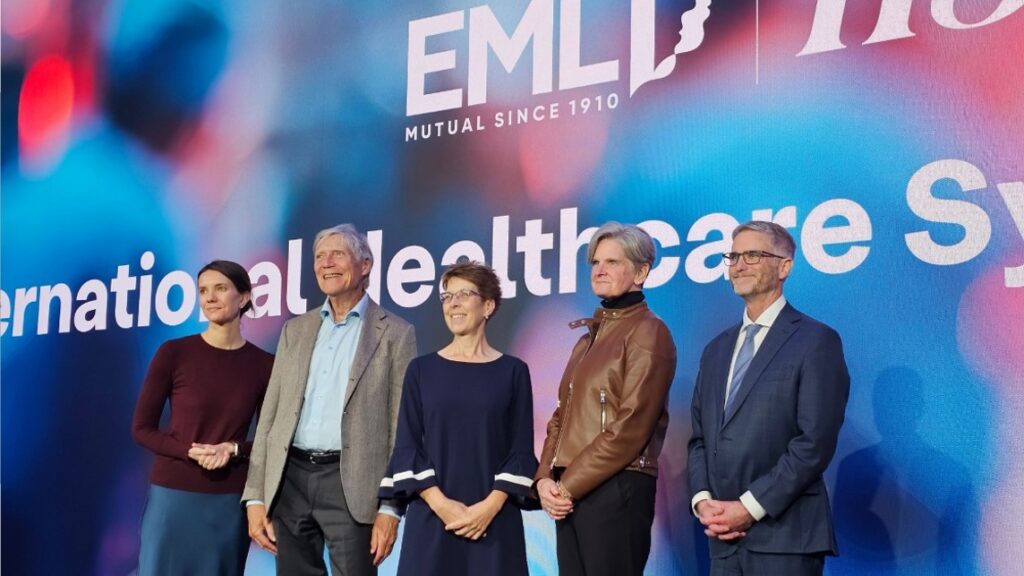
Healthcare workers dedicate their careers to caring for others, often in complex and demanding environments. On Tuesday 11 August, healthcare leaders, researchers, wellbeing specialists and injury management professionals came together at the International Healthcare Symposium 2026 to explore how organisations can better support the people who care for our communities every day.
Hosted by EML, this year’s symposium, Designing Safe Work: Health, Recovery and Leadership, focused on evidence-based approaches to creating safer, healthier and more sustainable workplaces across the healthcare sector. The program examined some of the most significant challenges facing healthcare organisations today, including burnout, occupational violence, moral injury, psychological safety, workforce wellbeing and recovery at work.
EML CEO, Don Ferguson, said the symposium reflects the growing importance of supporting both the physical and psychological wellbeing of healthcare workers.
Healthcare has always been demanding, but today's workforce is navigating increasing complexity. Staff shortages, rising service demand, occupational violence, emotional fatigue and psychosocial hazards are creating challenges that can no longer be viewed in isolation. Creating safer, healthier workplaces has never been more important.
Don Ferguson, EML CEO.
International experts
The event featured an impressive lineup of experts from Canada and the United States, and local Australian speakers, sharing the latest research, practical strategies and real-world insights to help organisations strengthen workforce health and recovery outcomes. Presenters included Dr Michael P. Leiter, Associate Professor Renee MacPhee, Dr Wendy Dean, Dr Elisa Ilarda, Dr Lucinda Iles and Olympic gold medallist and business leader Alisa Camplin-Warner.
A key theme explored during the symposium was the growing body of international research examining violence against frontline healthcare and emergency service workers. Associate Professor Renée MacPhee presented findings from the Canadian Study of Violence Against Paramedics, which demonstrated the far-reaching consequences of workplace violence, including burnout, psychological injury, staff attrition and impacts on personal relationships.
The presentation also highlighted concerns around the normalisation of violence within the profession and the importance of stronger organisational, judicial and societal responses. Delegates heard a compelling call for collective action, recognising that violence against paramedics is not an individual issue but a shared challenge that requires coordinated efforts to better protect and support those who dedicate their lives to caring for others.
Our commitment to Healthcare
The symposium also highlighted EML’s ongoing commitment to the healthcare sector through its Mutual Benefits Program, which invests in research, innovation and industry partnerships that support safer workplaces and improved return to work outcomes. Over the past 12 months, EML has delivered more than 20 research and innovation initiatives designed specifically to address emerging challenges across healthcare and aged care environments.
Bringing together representatives from healthcare providers, government, insurers, researchers and industry leaders, the event provided an opportunity to share knowledge, challenge traditional thinking and identify practical actions to create lasting change.
As EML celebrates 115 years of supporting Australian workers, employers and communities, the symposium reinforced a simple but important message: behind every healthcare role is a person, and creating work environments where people can thrive is essential to the future of healthcare.
The International Healthcare Symposium 2026 is more than a conversation about workplace health and safety. It is an opportunity for leaders across the sector to learn from evidence, collaborate with peers and turn insight into action, ensuring that those who care for others are valued, protected and supported throughout their careers.
This material has been prepared for general information only. It has not been prepared for any person’s individual circumstances and is not intended to be legal, medical or workplace health and safety advice. The EML Group* takes no responsibility for the accuracy, currency, reliability and correctness of any information included in the material provided.