Light blue square shape on a colored background.

Supporting employers

Self insurance claims done right

Managing injury claims as a self insured employer doesn’t need to be challenging.

We’re here to make it easy. As the largest provider of claims management services for self insurers in Australia, we simplify the process, ensuring your claims are managed properly and in line with legislation. From coordinating medical care to overseeing rehabilitation, we support your business at every stage. As a third-party administrator (TPA), we work closely with your team to ensure your employees receive the care they need, in a way they expect from their employer.

Our people-focused approach and commercial expertise help you manage liabilities while ensuring a smooth and responsible recovery process that reflects your company values and culture. With a deep understanding of Australian self insurance obligations and strong relationships with workers compensation regulators nationwide, we ensure you maximise the financial and commercial benefits of self insurance while remaining compliant. And, through the Mutual Benefits Program, you’ll also get valuable free resources to enhance workplace safety, reduce risks, and improve your claims management performance.

Whether you’re new to self-insurance or need a better claims process, our teams of actuaries, business analysts, and technology experts give you the support, systems, and insights to manage claims confidently – so you can take care of your workers and your business.

Doing more than just the basics

Our claims model has been refined using insights from our Australia-wide exposure to workforce trends and industry best practice. In addition to specialist roles mental health specialists and legal specialists, our service model is propelled by innovations that enhance the recovery process and empower our front-line staff to deliver claims management activity which really makes a difference.


Valliant psychological support

The Valliant program places expert psychological resources at the very start of the claims process, ensuring injured workers receive specialised support from day one – before claims escalate, before treatment delays cause further harm, and before psychological injuries spiral into long-term work absences.

Read Less Read More

Custom claims management system

Our purpose-built personal injury claims management system is compliant with all regulatory requirements for every state and territory in Australia. With tailored workflows, integrated electronic document management and administrative efficiency, our system allows our people to focus on the activities which matter most.

Read Less Read More

Regulatory relationships

We recognise the critical importance of supporting our clients in regulatory relationships. Our scale and experience in self insurance has enables us to establish relationships with each state and territory regulator over decades. This enables us to monitor requirements in each jurisdiction to ensure our business processes align with current and evolving regulatory expectations, offering a unique benefit to our customers.

Read Less Read More

Actuarial services

Our Actuarial Services Team works with a range of our self-insured customers across state-based and national workers’ compensation schemes, as well as personal injury regulators. They monitor performance and perform deep-dive analyses to identify emerging trends to identify key drivers of claims costs and the efficacy of improvement initiatives. Together, we work with our clients to design strategic interventions to positively impact claim liabilities and provide support into establishing and monitoring performance targets at all operational levels.

Read Less Read More

Resources

Resources for claims, recovery and workplaces

News & Community

Latest news
top tips to start the year

Top WHS tips to start the year

The start of the year is a good opportunity for us to...

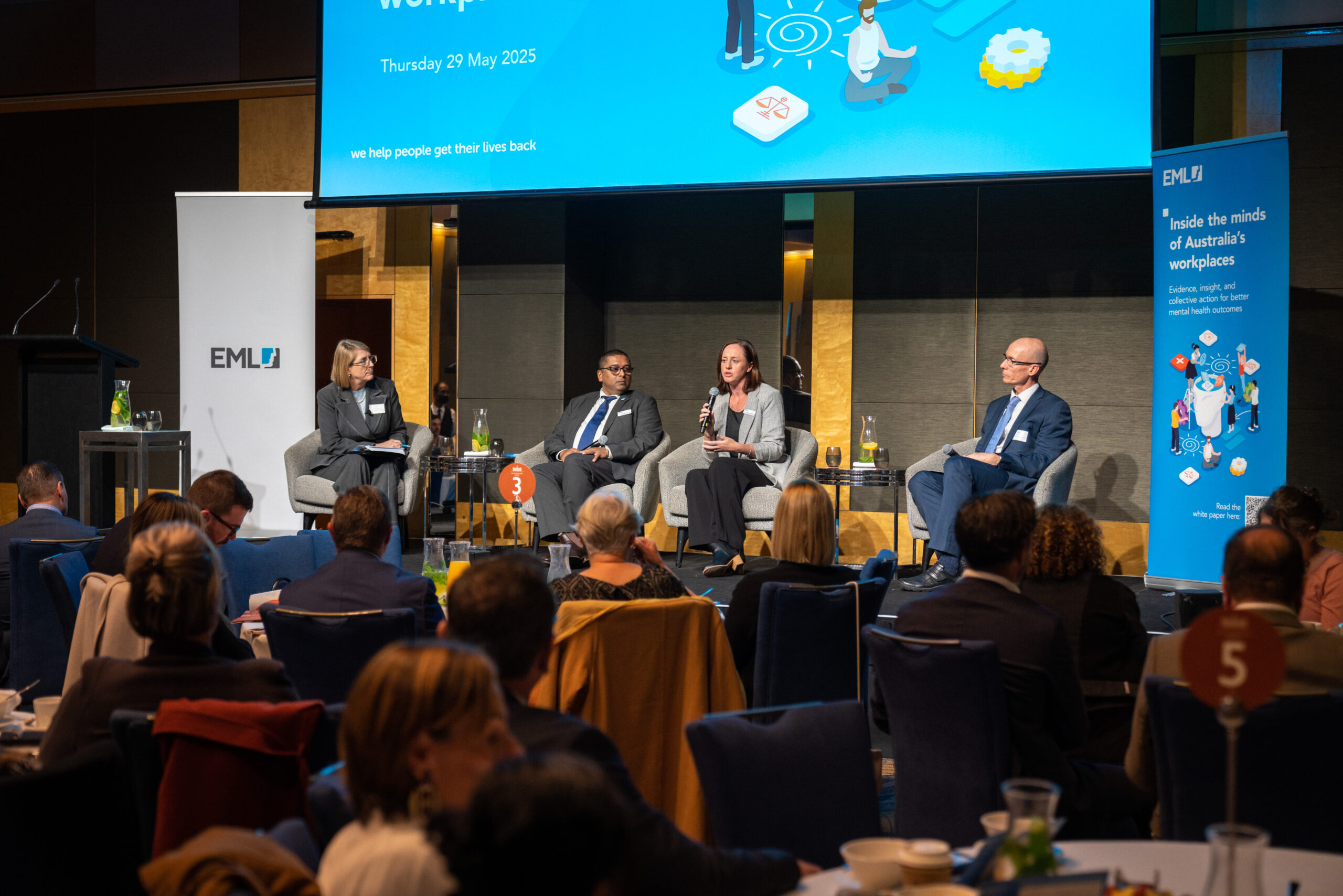
Inside the minds of Australia’s workplaces: A groundbreaking mental health white paper  

EML proudly hosted events in Sydney and Melbourne to launch our latest...

Supporting superannuation trustees after ASIC’s review

In April 2025, ASIC released its report, “Taking ownership of death benefits:...

EML named a finalist at the Insurance Business Awards

EML Group is delighted to be named a finalist in two categories...

Training

Customised and flexible learning for workplace peace of mind

Upcoming sessions

Browse our training across workers compensation, health and safety, return to work and mental health.

Workers compensation: National updates and insights

This course is designed to provide employers with an update on current issues impacting workers compensation schemes, the latest trends, external factors and legal implications, and the expected implications of these issues for employers. Topics include: Overview of Workers Compensation in Australia; State Schemes updates and impacts.
Host : Internal

Upcoming sessions

Browse our training across workers compensation, health and safety, return to work and mental health.

Managing risk in an ageing workforce

Workforces are more age-diverse than ever, bringing both opportunity and evolving risk. This session explores the physical, psychological, and organisational risks associated with an ageing workforce, and how these can impact health, safety, and performance. Participants will gain practical strategies to support safe, sustainable work and build more age-inclusive workplaces.
Host : Recovre

Stay S.A.F.E.R.® de-escalation program

Workplace interactions can sometimes become challenging, emotional, or confrontational. The Stay S.A.F.E.R.® De-escalation Program provides practical skills and strategies to help participants recognise early signs of escalation, respond effectively to heightened emotions, and support safer, more positive outcomes for everyone involved. This interactive workshop explores the Escalation Cycle and equips participants with techniques to prevent situations from intensifying, communicate effectively under pressure, and apply de-escalation strategies in a range of workplace contexts. Participants will also learn how to maintain safety during emergency situations and reflect on incidents to support continuous improvement.
Host : Our Curious Minds

Fatigue is more than tiredness

Fatigue is now recognised within psychosocial hazard frameworks, not just as a physical safety issue but as a psychological risk factor. Ongoing workload pressure, long hours, mental load, and emotional strain can erode coping capacity, judgement, and wellbeing. This session helps leaders recognise fatigue as an early risk indicator.
Host : Lysander

Upcoming sessions

Browse our training across workers compensation, health and safety, return to work and mental health.

Decoding intangible factors: Maximise return to work outcomes

Why do two workers with the same injury have vastly different recovery outcomes? The answer lies in the psychosocial landscape. Work Healthy Australia will explore the psychological drivers of return-to-work success. Join us for a data-driven, practical session designed to turn complex psychosocial theory into actionable workplace recovery strategies.
Host : Work Healthy Australia

Role of the Return to Work Coordinator (VIC)

This WorkSafe Victoria endorsed Return to Work (RTW) program is designed to equip RTW Coordinators with the tools they need to effectively manage return to work under the requirements of the legislation and the principles of effective injury management. A WorkSafe endorsed certificate will be provided upon full participation in the two-day RTWC program. All pre work materials will be provided.
Host : Workplace Interventions

Understanding biopsychosocial risk factors and assessments

Successful recovery after a workplace injury is influenced by more than the diagnosis or severity of injury. Research consistently demonstrates that psychosocial factors often have a greater impact on recovery and return-to-work outcomes than the physical injury itself. This session provides employers, RTW coordinators and supervisors with practical knowledge to identify psychosocial risk factors that may delay recovery, understand the purpose of biopsychosocial assessments, and implement workplace strategies that support recovery and durable return-to-work outcomes.
Host : KINNECT
Person smiling, wearing headphones at a computer.
Get in touch your way
Chat with our local claim experts - we're always here to help