

icare Insurance for NSW

Workers compensation for public sector workers

<strong>Matthew Rodwell</strong>
Matthew RodwellGeneral Manager, Insurance for NSW
“For 20 years, we’ve proudly supported the NSW Treasury Managed Fund, recognising the challenges of serving the community and remaining dedicated to those who protect others.”

Government agencies have unique workers compensation needs. We’re experts in providing the right support.

As a Claims Service Provider (CSP) for icare’s Insurance for NSW (ifNSW), we manage workers compensation claims for public sector employees under its Treasury Managed Fund (TMF) – the state’s insurance scheme that protects government employees, major assets, and infrastructure.

For over 20 years, we’ve helped injured government workers get the care and support they need under the Treasury Managed Fund, whether it’s a slip-and-fall in a government office or a complex injury from frontline emergency services work.

With our deep knowledge of government requirements and best-practice claims management, we help public sector workers recover and agencies fulfil their obligations, delivering tailored support that meets the needs of workers, agencies, and the wider TMF scheme.

Quick access - report an injury

If you’re a NSW government employee and need to make a claim for an injury, you should contact your employing agency directly who will report on your behalf.

Contact us anytime

Visit the icare portal

Workers and employers can now submit and manage workers compensation claims online. Click here to visit the icare portal.

Choose your pathway to support

For workers

Care, treatment and compensation as you manage your recovery

For employers

Claims handled, risks reduced and free wellbeing resources for your team and workplace

For providers

Partnering for timely care and treatment so workers get the help they need, fast
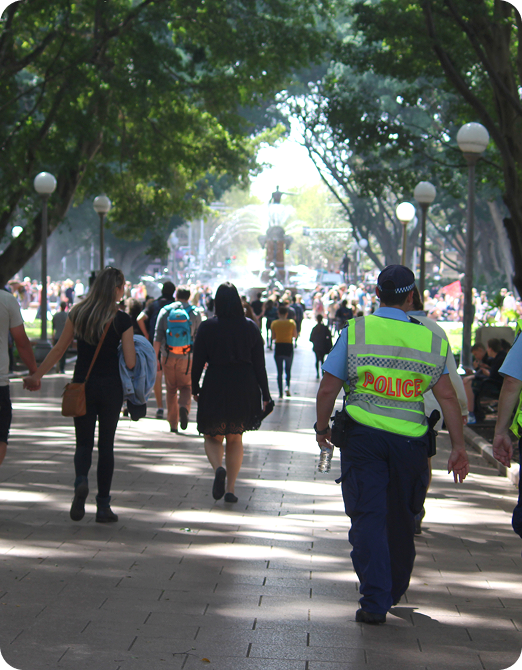
Specialised support when you need it most

We have a deep understanding of what it means to have a career in uniform

staff dedicated to serving those who serve us
 
0
Invested into initiatives to support the emergency services industry
+$ 0 M
Emergency services workers supported to date
 
+ 0

Mobile case management

Our mobile case managers provide face-to-face support and personalised care to workers and employers. A new addition to our service offering in this portfolio, they can make make on-the-spot decisions to fast track treatment for a quicker recovery and return-to-work.

Resources

Resources for claims, recovery and workplaces

Training

Customised and flexible learning for workplace peace of mind

Upcoming sessions

Browse our training across workers compensation, health and safety, return to work and mental health.


Workers compensation: National updates and insights

This course is designed to provide employers with an update on current issues impacting workers compensation schemes, the latest trends, external factors and legal implications, and the expected implications of these issues for employers. Topics include: Overview of Workers Compensation in Australia; State Schemes updates and impacts.
Host : Internal

Upcoming sessions

Browse our training across workers compensation, health and safety, return to work and mental health.

Managing risk in an ageing workforce

Workforces are more age-diverse than ever, bringing both opportunity and evolving risk. This session explores the physical, psychological, and organisational risks associated with an ageing workforce, and how these can impact health, safety, and performance. Participants will gain practical strategies to support safe, sustainable work and build more age-inclusive workplaces.
Host : Recovre

Stay S.A.F.E.R.® de-escalation program

Workplace interactions can sometimes become challenging, emotional, or confrontational. The Stay S.A.F.E.R.® De-escalation Program provides practical skills and strategies to help participants recognise early signs of escalation, respond effectively to heightened emotions, and support safer, more positive outcomes for everyone involved. This interactive workshop explores the Escalation Cycle and equips participants with techniques to prevent situations from intensifying, communicate effectively under pressure, and apply de-escalation strategies in a range of workplace contexts. Participants will also learn how to maintain safety during emergency situations and reflect on incidents to support continuous improvement.
Host : Our Curious Minds

Fatigue is more than tiredness

Fatigue is now recognised within psychosocial hazard frameworks, not just as a physical safety issue but as a psychological risk factor. Ongoing workload pressure, long hours, mental load, and emotional strain can erode coping capacity, judgement, and wellbeing. This session helps leaders recognise fatigue as an early risk indicator.
Host : Lysander

Upcoming sessions

Browse our training across workers compensation, health and safety, return to work and mental health.

Decoding intangible factors: Maximise return to work outcomes

Why do two workers with the same injury have vastly different recovery outcomes? The answer lies in the psychosocial landscape. Work Healthy Australia will explore the psychological drivers of return-to-work success. Join us for a data-driven, practical session designed to turn complex psychosocial theory into actionable workplace recovery strategies.
Host : Work Healthy Australia

Role of the Return to Work Coordinator (VIC)

This WorkSafe Victoria endorsed Return to Work (RTW) program is designed to equip RTW Coordinators with the tools they need to effectively manage return to work under the requirements of the legislation and the principles of effective injury management. A WorkSafe endorsed certificate will be provided upon full participation in the two-day RTWC program. All pre work materials will be provided.
Host : Workplace Interventions

Understanding biopsychosocial risk factors and assessments

Successful recovery after a workplace injury is influenced by more than the diagnosis or severity of injury. Research consistently demonstrates that psychosocial factors often have a greater impact on recovery and return-to-work outcomes than the physical injury itself. This session provides employers, RTW coordinators and supervisors with practical knowledge to identify psychosocial risk factors that may delay recovery, understand the purpose of biopsychosocial assessments, and implement workplace strategies that support recovery and durable return-to-work outcomes.
Host : KINNECT

News & Community

Latest news

Work health and safety implications of climate change

Extreme weather events are no longer rare, they’re becoming the new normal....
top tips to start the year

Top WHS tips to start the year

The start of the year is a good opportunity for us to...
EML IfNSW 20 Years Supporting the NSW TMF and Emergency Services

Partnering with TMF and emergency services in workers compensation for 20 years

In 2025 we recognise a significant milestone for our Insurance for NSW...

EML shines at the 2025 PIEF Awards with three winners

On Monday 27 October, we celebrated the incredible achievements across the personal...
Person smiling, wearing headphones at a computer.
Get in touch your way
Chat with our local claim experts - we're always here to help