Resource Hub

Education industry

Stay informed and prepared with expert resources, industry data, and practical tools to help navigate the workplace risks within the education sector.

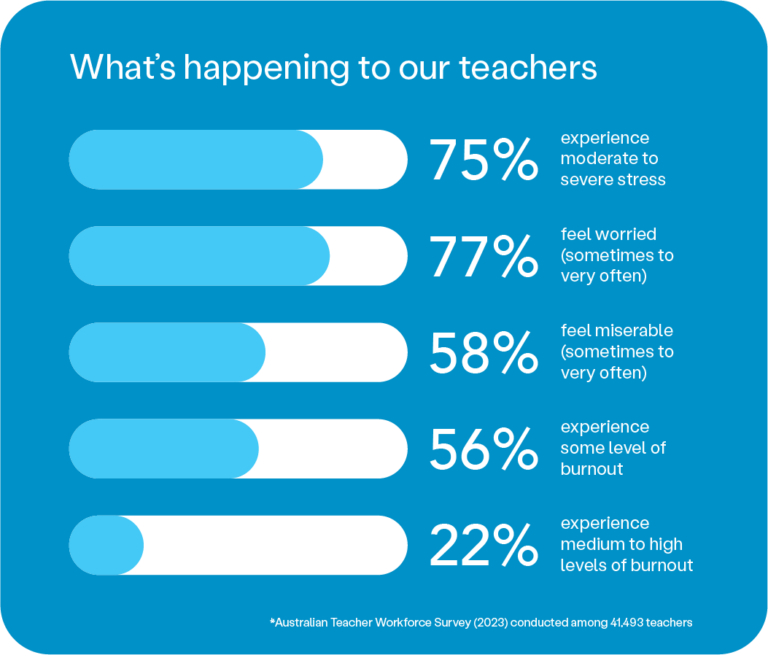
Australia’s education sector is facing growing pressure as teachers and school staff manage increasing workloads, classroom disruptions, accidents, and rising incidents of aggression and occupational violence. Educators are exposed to verbal abuse, bullying, harassment, and other psychosocial risks that contribute to stress, burnout, and psychological injuries, affecting wellbeing, retention, and learning outcomes.

Employers and education leaders must take proactive steps to support teacher wellbeing through mental health initiatives, safety policies, and injury prevention strategies. Creating a safe and supportive environment is essential to protecting educators and maintaining stable, effective school communities.

At a glance

The risk profile

Mental health risks in Education: Increasing impact on teachers and school staff

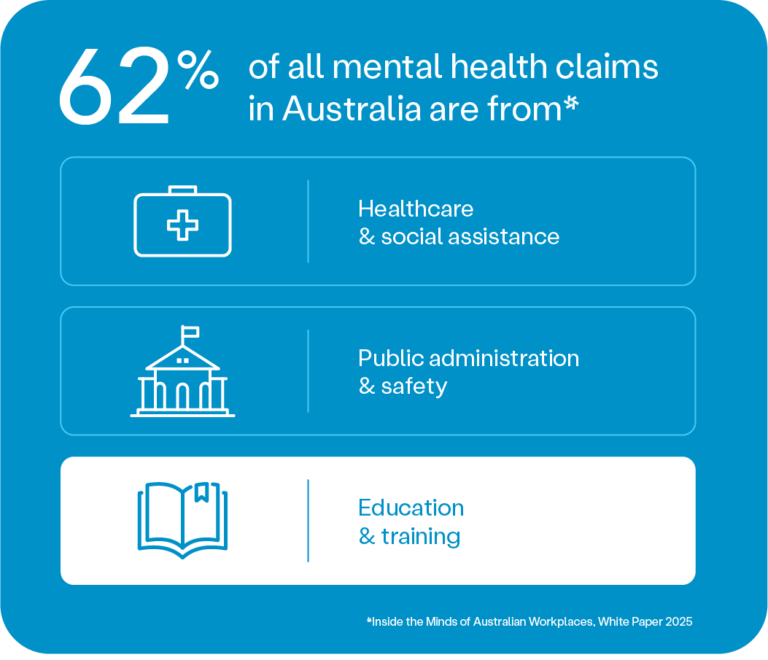
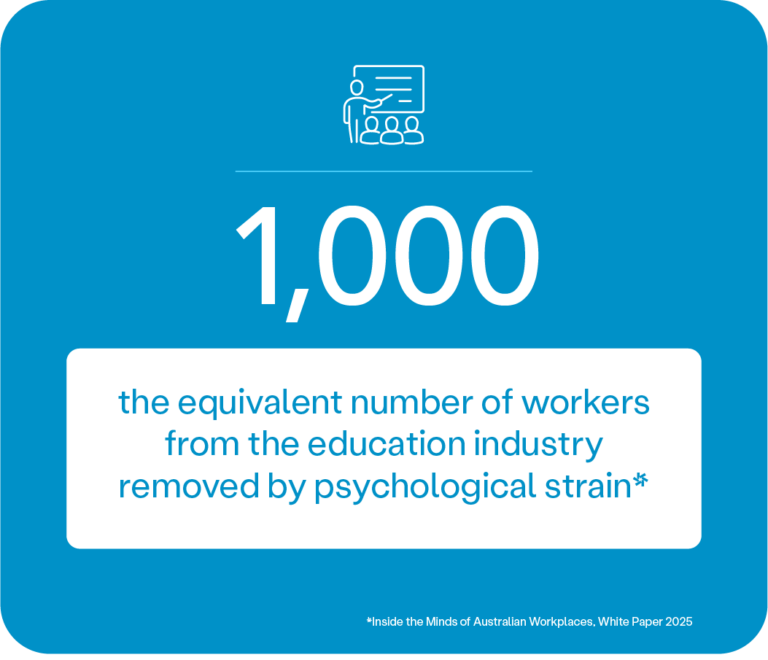
According to findings from EML’s Inside the Minds of Australia’s Workplaces, healthcare, education, and public safety account for 62% of all mental health claims nationwide. Teachers are exposed to both environmental and psychosocial risks, including workplace accidents, high workloads, emotional strain, bullying, harassment, and occupational violence.

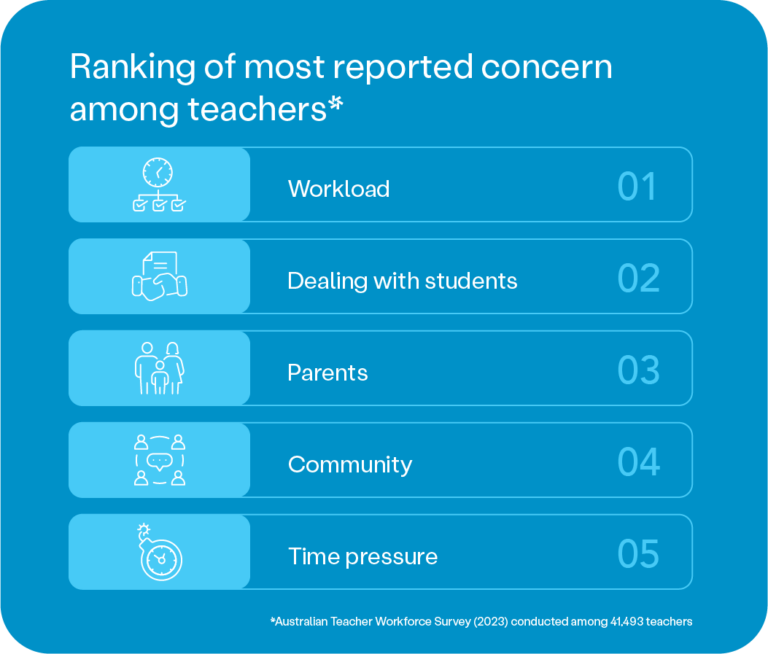
Rising behavioural challenges from students and parents, extended work hours, and extracurricular demands are driving fatigue, burnout, and longer recovery times for psychological injuries, while chemical exposure in classrooms and labs adds to overall risk.

Emerging risks and innovation

The education sector is being reshaped by emerging risks, regulatory change, and technology adoption, increasing the focus on psychosocial safety, workforce wellbeing, and injury prevention.

Digital learning and hybrid models have introduced challenges such as screen fatigue, isolation, and ergonomic issues, while AI and automation in training environments bring new work health and safety requirements. Safe Work Australia’s 2023 Model Code of Practice now requires the systematic management of psychosocial hazards, as ongoing teacher shortages and an ageing workforce intensify workload pressures and recovery demands.

Supporting mental health in Education

We have developed two tailored mental health tools to support EML Group customers in the education sector in collaboration with transformative culture experts Lysander.

Applicable across early childhood, primary, secondary, and higher education settings, the Healthy Minds, Thriving Educators tools provide practical, easy-to-use support to help reduce psychosocial risks and minimise the impact of psychological injury.

Scheme specific resources

Education and training

Each jurisdiction provides specific insights into the priorities, guidance and recommendations to address the risk profile of the retail industry. 

Our Mutual Benefits Program offers expert-led training and e-learning to improve workplace safety, compliance, and mental health, fostering a strong safety culture that reduces risks and supports professional development.

Scenario 2 – School (SafeWork NSW)

This provides school-specific scenario examples featuring common psychosocial hazards and risks, example controls and approaches to maintain, monitor, review and achieve continual improvement of the risk management approach.

Available here

Work-Related Violence in Schools

The Victorian Department of Education’s Work-Related Violence in Schools website offers Policy, Procedure, and Resources designed to support safe school environments. This includes requirements for managing violence risks, how to implement controls and respond to incidents, and practical tools like templates and communication materials to assist schools.

Visit the website

Psychological Health and Safety for School Staff

The Victorian Department of Education’s Psychological Health and Safety for School Staff website offers Policy, Procedure, and Resources to guide schools in managing psychosocial risks. This includes identifying and controlling workplace hazards to protect staff wellbeing, practical steps for implementing and monitoring these controls, and support materials such as tools and templates to assist schools in applying the requirements effectively.

Visit the website

Work-Related Violence

This SafeWork SA document provides a framework for managing work-related violence, covering prevention, response, and recovery. It outlines WHS responsibilities to identify risks such as aggression and unsafe environments and implement controls including training, consultation, and safe workplace design. It also details incident response steps such as immediate safety actions, de-escalation, reporting, investigation, and support for affected workers.

Available here

Managing health and safety risk guideline

This guideline from Queensland Department of Education outlines a structured approach to identifying, assessing, controlling, and reviewing workplace health and safety risks across schools and education workplaces. It covers hazards such as psychosocial risks, manual handling, slips and falls, hazardous chemicals, and environmental risks, while emphasising consultation, risk assessments, incident reporting, and ongoing monitoring to support safer learning and working environments.

Available here

Education and training

Presented by EML Group and industry experts, this program offers practical insights and strategies to help participants stay ahead of emerging workplace challenges. Topics include the latest developments in injury prevention, injury management, and workers compensation.

Resources, tools and data insights for safer, smarter workplaces

We offer a suite of five EMlearning training courses that provide a scalable and sustainable approach to strengthening wellbeing, resilience, and culture in schools. The learning journey intentionally progresses from self-awareness to collective responsibility.

EML commissioned research conducted by Monash University’s Healthy Working Lives Research Group. By analysing four major national data sets across workers generally, those with compensation claims, and those with mental health-related claims, this research offers more than insight—it’s a clear call to action.

The Occupational Violence and Aggression (OVA) Health Check is a tool crafted to evaluate the risk level of OVA within a workplace.

A step by step guide to support workplaces in assessing workplace preparedness and supports for an incident pertaining to violence or aggression.